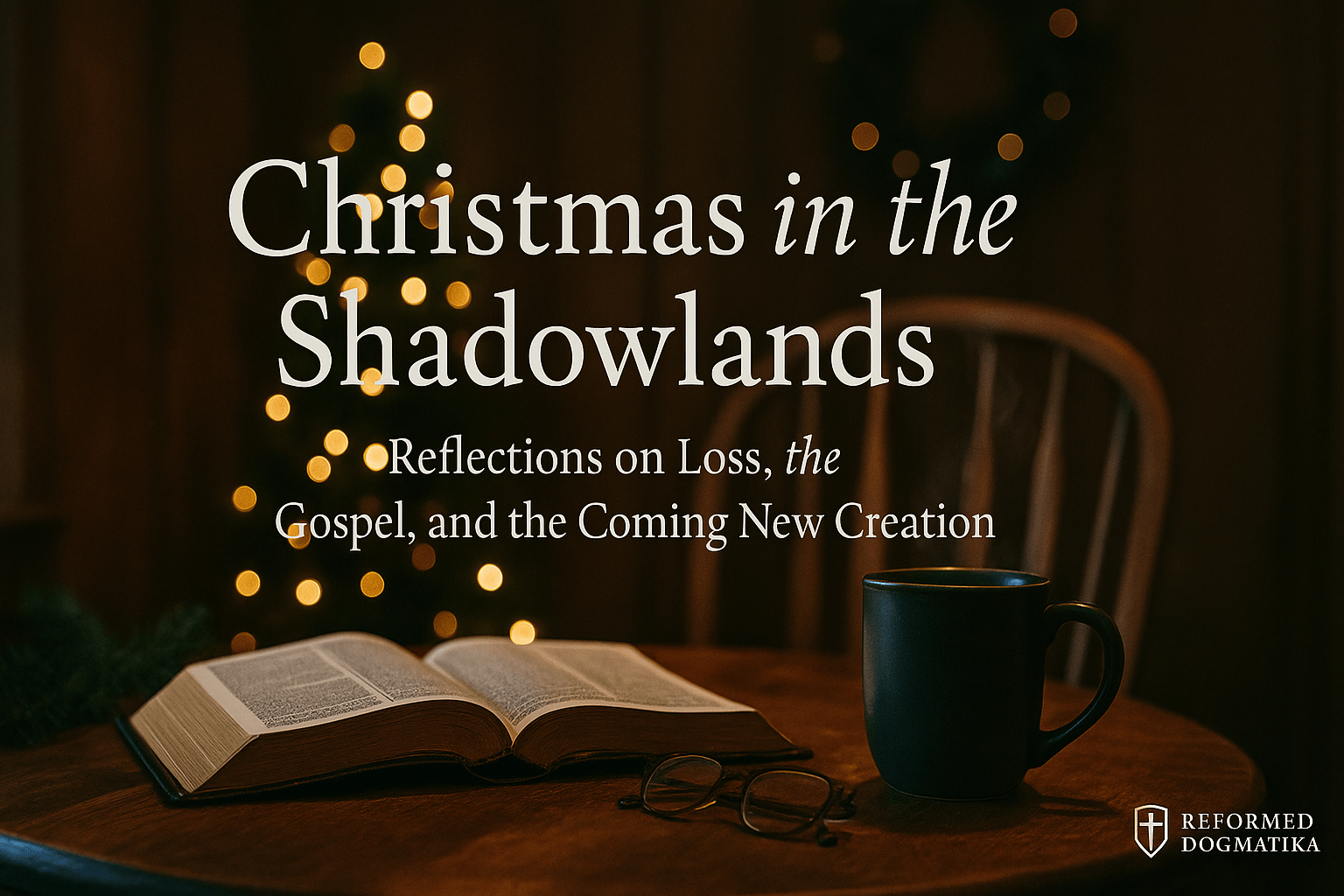
The word Christmas conjures many emotions, colors, sounds, scents, and scenes. Some of the first to come to the forefront of one’s mind are likely the recognizable cranberry red and cedarpine green, the melody of “Silent Night” repeating, nativity scenes of varying accuracy, the smell of freshly baked cookies and spiced apple cider, the family gathered ‘round the fireplace with mugs of hot chocolate and coffee.
There are string lights and Christmas trees, pristinely wrapped gifts and less pristinely wrapped ones too, homemade pies, and above all, the pervading feeling of love at every turn, as children and parents, nieces and nephews, aunts and uncles, grandfathers and grandmothers enjoy one another and love boldly.
The gift of love and company outshines even the grandest gesture, for it is the mundane that means the most, after all. After all the grandeur and glitter, underneath all the shimmering decorations and twinkling lights, it is chiming laughter and warm embraces that will be treasured. The novelty of the gifts will fade, the decorations will languish in dust when the Christmas season ends, and the food will be gone in a week, but the memories are immortal.
It the decades to come, it is the memories that remain most vivid and near to one’s heart, that make the colors beautiful, the sounds pleasant, the scents sweet, and scenes of the everyday something romantic, something straight from the pages of an old storybook.
Empty Chairs and Christmas Sorrow
Despite its beauty and all the goodness associated with thoughts of it, Christmas is not impervious to sadness. Perhaps one of the most heartbreaking images, one of the only things that can mar the picture-perfect scene when December comes, is that of the dining table, one chair different from the rest–empty.
Empty chairs are not sad in and of themselves, but when they are empty where once they had been full, one can imagine the chair itself weeping for its customary occupant, shedding invisible tears into the grain of the wood. The sight is enough to reopen the wound of grief, bleeding sluggishly under the gleaming lights and glistening holly.
The hole left by death is gaping at Christmas, and as those left behind are seated around the table, it seems that naught could soothe the ache altogether, for nothing can replace everything that person was.
There is a little I remember of the first Christmas missing someone in that way. It was the first Christmas we had without my aunt, my Tia, some sixteen years ago.
I was only six years old, but I remember missing her laughter and her great hugs. I missed all the things she was known to say, and I missed her twinkling eyes. I remember, most of all, feeling her absence, especially for what it was to my family around me.
I remember being easily comforted by the knowledge that she was in Heaven with Jesus. It seemed so simple to my little mind then. Simple, as so much is for a small, silly, six-year-old girl.
The True Meaning of Christmas
One December afternoon, I found myself in a hospital parking lot, sitting in the trunk of my family’s SUV, as my family anticipated the imminent departure of my grandfather (abuelito in Spanish), affectionately called “Lito,” as he prepared to meet the God who had fed him all the years of his life.[1]
A couple days before, I had begun reading The Last Battle by C.S. Lewis, the last book in The Chronicles of Narnia series. The Last Battle, as the name suggests, tells of the last battle to take place in the land of Narnia leading up to its destruction so the Real Narnia might be revealed.
I read in hopes of finding some escape from reality, seeking escapism, but having been well acquainted with Lewis’ love for allegory, I should have known better than to expect that from him.[2] I picked up on the allegory and allusion, but still, I expected frivolous fancies and vague references.
That is, until I came to this moment:
“It seems, then,” said Tirian, smiling himself, “that the Stable seen from within and the Stable seen from without are two different places.”
“Yes,” said the Lord Digory. “Its inside is bigger than its outside.”
“Yes,” said Queen Lucy. “In our world too, a Stable once had something inside it that was bigger than our whole world.”[3]
My eyes filled with tears in an instant.
The phrase “a Stable once had something inside it that was bigger than our whole world” struck me in the heart, and I realized that somewhere along the way, I had missed the whole point.
Of course, that something inside of a stable that was bigger than our entire world is the God-man, the Incarnate God: Jesus Christ. Light from light, very God from very God, begotten not created, come down from His Father’s glory for us and for our salvation.[4] He took on human flesh and was born into the world to make a way for sinners to commune with a holy and perfect God, to become sons of God.[5]
What was the end of Christmas if not to draw our eyes to the gospel and fix them firmly on our Savior? What was the point if not for Christ to be glorified for who He is and what He has done on our behalf?
As He lay in that manger, bound in swaddling clothes, He never ceased to be the Great I AM. He was bigger than the whole world, even as He dwelt in it.
The beauty of the Incarnation and the glorious hope of the gospel, even in the face of death, washed over me.
As the Narnia from the first six books was only a reflection of the Real Narnia, so also is our world but a poor, middling glimpse of the astounding perfection of the New Heavens and Earth. Narnia was never an end in and of itself; it was meant to point to the real thing. I understood more profoundly that this world was but a temporary one, for the New Creation was coming, where Lito would never die, where I would see him again, where everything would be as it was intended.[6]
I did not need much explaining when my father told me he was thinking of singing Christmas carols at Lito’s funeral. It made perfect sense.
That Christmas, we celebrated the homecoming of a sinful man who was saved by the very same God-man whose advent we rejoice in. The truth of this reality first arrived in the words I read that solemn afternoon, and it was strengthened and solidified as my father reminded me of the gospel.
We sang those carols at his funeral with joy, surrounded by the sights and sounds of Christmas. Despite the tears in our eyes, we sang with hearts made full and whole by Christ. We had hope because of the babe lying in a manger two thousand years ago, bigger than that manger, bigger than the stable–bigger than the whole world.
The hope for a new creation, for the resurrection, and for all that Christ came to give to us are echoed in the words of the third stanza of “Hark the Herald Angels Sing”:
“Mild He lays His glory by,
Born that man no more may die;
Born to raise the sons of earth;
Born to give them second birth.”[7]
Indeed, Christ laid His glory by that Lito may experience the second birth and live, though he died.[8]So it is for all those who put their trust in Christ.
At thirteen years old, this was my comfort at Christmas. I could mourn, but not as those without hope.[9]
The comfort did not come as easily as it did at six. I felt the loss far more. The empty chair meant more to me. Even so, it was still simple. Christ had entered our fallen, broken world–the Shadowlands, as the Old Narnia was called–to save sinners, and He had saved my Lito. Now my Lito was with Him forever.[10]
This was Christmas, indeed.
Christmas in October
I thought of Christmas on a mundane evening this past October. Yet, there was something different about this day. It was the birthday of a dear friend of mine, a man that I had come to deeply respect and admire. Not only that, it also marked a month to the day since he unexpectedly (to us, anyway) finished the race that is the Christian life, joining the church triumphant.
I could not help but reflect on things unsaid, the phone call unmade, the gift unpurchased. I thought of my cousin and her fiancé, who were there at the scene of his death, a horror that I will never be able to understand. I thought especially of his family, of the incomprehensible trial that is theirs, of the tragedy that is the anniversary of his passing also being his birthday.
I thought of Christmas, and how heartbreaking it is that this year, they will have their first Christmas without him.
And somehow, Christmas and its meaning came alive in that moment. The stable that was bigger on the inside filled my mind once more.
Three days before his passing, I began reading The Last Battle for the third time. I finished it in the hours following his death. The phrase “further up and further in” is repeated like a refrain in the book’s final chapter, for the characters go further and further into the Real Narnia, discovering the wonder and beauty of the world as it was meant to be.[11] That was what my friend was experiencing as he beheld the beauty of heaven.
Just like my Tia and my Lito, this dear brother died in the faith, trusting in Christ to be his faithful Savior, in life and in death.[12]
My friend was indeed dear to me, and I to him, such that some days prior to his death, we had a conversation about what it would mean for him to pursue me, a hope beginning to bloom that perhaps there would be a happily ever after.
With the autumn sun in my eyes, I wanted to be blinded by the would-have-beens, but instead, I was reminded of what was and what shall be, what not even death could take away.
Death could kill our hopes and our dreams, but it cannot kill an eternal soul, and it cannot kill the hope of eternity with our covenant God, the hope of Creation restored to what it was meant to be.
Death is a languishing foe. The Shadowlands are fading away.
The what-ifs and would-have-beens notwithstanding, the truth was that my friend was worshiping the Lord in spirit and truth from the moment his soul returned to the sovereign God that gave it, and his family and all who knew him will see him again, for all who die in Christ will be raised on the last day.[13] The baby laid in a manger two millennia ago is the Word made flesh, and He is making all things new.[14]
Death cannot take that away, for it is death’s defeat by the seed of the woman, Jesus Christ, that has given us this hope.[15] Christ, our sympathetic High Priest, who entered into our pain, suffering, and heartache to free us from it entirely on the day we see His face.[16] While I am unable to comprehend what sort of trial and sorrow will belong to his family this Christmas, Christ knows it intimately.
The Son of God, the Second Person of the Trinity, was born into our suffering, lived the life and died the death that should have been ours, and He rose from the dead on the third day, all to give believing sinners life, and that more abundantly.[17]
This is why, on a warm October day, I thought of Christmas.
Though sorrow and loss are ever tragic, strange, and too complex to fathom, the gospel is still simple. So also is the meaning of Christmas.
Nostalgia for a World to Come
The difference between Old Narnia and the Real Narnia is described this way:
“The new one was a deeper country: every rock and flower and blade of grass looked as if it meant more. I can’t describe it any better than that: if you ever get there, you will know what I mean.”[18]
The saints who have gone before know precisely what that means. They are more alive than we are. What we now see through a glass darkly, they see face to face.[19] When I consider the New Creation, the true Real Narnia, I am reminded that the death of my dreams is nothing and cannot be compared to the beauty of heaven, where I will wish for finite things no longer, where my friend is far happier than I ever could have hoped to make him, where Lito and my Tia are far happier than they ever were on this earth.
Christmas may be tinged with sorrow, stained by the presence of one or more lonely chairs, but there is still joy. There is joy, for we will one day behold the faces of our lost loved ones, but even greater, we shall behold the face of God.
The greatest joy we have ever experienced at Christmastime is possessed by the Shadowlands, only a shadow of the joy we will know in the New Creation. As Narnia was only a “shadow, or a copy,” of the Real Narnia, so is this world a shadow, a bland taste, of what the new heavens and earth will be![20]
The shining lights of Christmas do not compare to the light of the Son, nor the gold ornaments and accents to the streets of gold, nor the myriad sweets and delicacies to the marriage supper of the Lamb. The evergreens and Christmas trees will be obsolete when there is the Tree of Life, and the prettily wrapped gifts, including the gift of love and company, incomparable to the gift of life everlasting.
Nostalgia for the sounds, scents, and sights of Christmas is really nostalgia for the world that was before the Fall, perfect and unblemished, one that we have not yet seen. It is hope for a better world, one that is more real and less sorrowful, one without sadness and pain—without empty chairs.
The answer to Samwise Gamgee’s question from The Lord of the Rings, “Is everything sad going to come untrue?” is a resounding, unfettered, yes![21] Even now, everything sad is becoming untrue, as we are sanctified and made more like Christ, as the day when Christ returns and creation is made wholly new draws near. On that day, every tear will be wiped away, He will be our God, and we will be His people forever and ever.[22]
In these Shadowlands, which are a vale of tears, all things, whether leaf and blade, rain and drought, food and drink, health and sickness, prosperity and poverty, full chairs and empty chairs–life and death–come from our faithful Father’s hand.[23] All these things turn the vale of tears into a vale of soul-making, something deeper, something greater.[24]
The tears and suffering are never in vain. The joy of a loved one’s company and the deep, deep sorrow of their absence lie in stark and painful opposition to one another, and yet they are united together as the Lord, in His beautiful Providence that we fail to comprehend, uses them both to conform us into the image of His glorious Son.[25] The crown of life awaits, and the path marked out toward that goal is full of merriment and full of trial in varying and mingling turns, but it is always joyful.
In all things, we have joy unspeakable, full of glory.[26]
So often we speak of joy and peace at Christmas, but only the Christian may truly know joy and peace, for it is found in knowing Christ, whom we do not see, who is the very Prince of Peace–who gives us hope of a merrier, happier, more peaceful day, more awesome than anything we have yet beheld with our eyes. For, indeed, no eye has seen, no ear has heard, nor has it entered the heart of any man on earth what our Father has in store for us.[27]
In The Weight of Glory, C.S. Lewis says this about the beauty of this world, this world that is the Shadowlands, and of the memories that we treasure dearly, memories that must include Christmas, our loved ones, and the dreams nearest to our hearts:
“These things—the beauty, the memory of our own past—are good images of what we really desire; but if they are mistaken for the thing itself they turn into dumb idols, breaking the hearts of their worshipers. For they are not the thing itself; they are only the scent of a flower we have not found, the echo of a tune we have not heard, news from a country we have never yet visited.”[28]
All the love, all the laughter, every treasured memory, even every bitter suffering pales in comparison to the glory that will be revealed in us and the glory of God that we will behold with our very eyes.[29]
When we are tempted to think of the beauties in the already as the best that we might get, when we are disillusioned with the sorrows of the Shadowlands, we must remember that the not yet is coming. It goes beyond what we might ever ask or imagine, for He shall give us those things that surpass our deepest requests and most daring imaginations.[30]
The New Heavens and Earth, the Real Heavens and Earth, are full of so much more than we could possibly conceive of. What we know now is real, but what we will know then will be more real.
When the consummation of all things arrives, and the New Creation is ours, it will be more marvelous than our happiest, merriest Christmas, and it is all because a stable once held something inside it that was bigger than our whole world.
Footnotes
FURTHER STUDY
If this reflection on grief during the holidays resonated with you, we encourage you to read Triumph, Disaster, and the Providence of God by Juliette Colunga — a companion meditation on how God’s fatherly hand sustains us through every season.
Deepen Your Study
Join our community to receive historic Reformed reflections and resources delivered to your inbox.