Around 1626, in the fields of Wicres near Lille, Louis DuBois was born into a steadfast Huguenot family. His life (likely shaped by the enduring legacy of Guy de Brès’s preaching in the region and rooted in the Calvinist convictions of his parents, Chrétien DuBois and Françoise le Poivre) would carry him from persecution in Europe to the founding of New Paltz, New York, in 1678.
Louis’s courage was tested in both his immigration and danger. Most famously, he was part of the daring rescue of his wife, Catherine Blanchan, from Indian captivity in 1663, a moment in Huguenot lore remembered for Catherine’s singing of Psalm 137, a psalm that anchored the worship of Huguenot exiles.
Alongside eleven fellow patentees, Louis built a community that carried the Reformed faith across the Atlantic and gave it a new home in America. This article traces his ancestral roots, the crucible of the Huguenot faith in Lille, his theological convictions, the patentees’ accomplishments, and the dramatic rescue that secured his place as the American Huguenot.1
Roots in Wicres: A Huguenot Family
Louis DuBois was born to Chrétien DuBois, a prosperous linen merchant, and his wife, Françoise le Poivre (both devout Huguenots), in the small village of Wicres, in Spanish Flanders (now France).2 Raised in a home where Scripture and the Psalms were central, Louis grew up immersed in Reformed piety.
Chrétien and Françoise likely worshiped in clandestine gatherings in nearby Lille, where the preaching of Calvinist pastors nurtured a new generation of Reformed believers. It was in this atmosphere, marked by both danger and devotion, that Louis inherited the faith that would guide him across the sea and into history.3
Lille’s Reformation Hub: Guy de Brès’ Impact
Five miles from Wicres lay Lille, a center of Reformation activity in the sixteenth century, and a place that likely shaped the DuBois family’s faith. There, secret Huguenot churches defied Catholic authorities who sought to enforce Roman orthodoxy through imprisonment and executions.4
One of the most influential voices in Lille was Guy de Brès (1522-1567), the Walloon Calvinist preacher who authored the Belgic Confession (1561). Preaching in Lille during the early 1560s, de Brès called for reform with clarity and conviction, strengthening the resolve of Huguenots across the region. His arrest and execution in 1567 turned him into a martyr, galvanizing believers in Lille and in nearby villages like Wicres.5
By the time Louis was born around 1626, Lille’s once-vibrant Huguenot community was increasingly reduced to worshipping in secret. Huguenot families gathered quietly, singing the French Psalms and reading smuggled texts such as Calvin’s Institutes of the Christian Religion, clinging to the faith that persecution could not extinguish.6
Wicres Under Pressure: A Persecuted Faith
The Huguenots of Wicres endured crushing pressures: excessive taxes, property seizures, and constant harassment, all without the comfort of a local Reformed church.
This climate of hostility only intensified as the seventeenth century progressed. By the 1650s, growing persecution forced many Huguenots to abandon their homeland altogether, seeking refuge in places where they could preserve their faith without fear.
Shaping a Huguenot: Louis’s Theological Convictions
As a French Huguenot, Louis DuBois was steeped in the rich theology of John Calvin, Theodore Beza, and Guido de Brès. The Belgic Confession gave structure and clarity to their convictions, articulating a faith that was both intellectually rigorous and pastorally comforting.
At the heart of Huguenot worship was the singing of the Psalms. These inspired songs, translated into French and set to simple melodies, became the lifeblood of their devotion. In moments of joy and in seasons of persecution, the Psalms not only anchored Huguenot piety but also sustained their courage, shaping Louis into a man whose faith would endure exile, danger, and the building of a new life across the sea.
Palatinate Refuge: A Calvinist Stronghold
By the 1650s, intensifying persecution drove Louis DuBois to seek refuge in Frankenthal, near Mannheim, in the lower Palatinate (territory of the German Empire), a region that had become a Calvinist stronghold under the protections of the Treaty of Westphalia (1648).7
In 1655, he married Catherine Blanchan, a fellow Huguenot exile, in the French Reformed Church of Frankenthal, a congregation that became their spiritual home. There, their sons Abraham and Isaac were later baptized, a sign that their faith and family life remained firmly rooted in the Reformed tradition.8
The Palatinate’s thriving Huguenot community not only deepened Louis’s Calvinist convictions but also prepared him for the challenges of life in the New World. In a providential twist, the German name Pfalz (Palatinate) would one day inspire the name of the Huguenot settlement he helped found in New York: New Paltz.9
Catherine’s Ordeal: Psalm 137’s Power in Exile
In 1660, Louis and his family settled in Kingston, New Netherland (New York), drawn by its relative religious tolerance.10 But in June 1663, their faith was tested when Esopus Indians raided the area and captured Catherine and three of their children.
Tradition holds that Catherine, facing imminent death after three months in captivity, was singing Psalm 137, “By the waters of Babylon, there we sat down and wept, when we remembered Zion” when Louis and a Dutch rescue party reached her.11 For Catherine, a young Huguenot woman who had already fled persecution in Flanders and exile in the Palatinate, this painful song of exile from the Genevan Psalter was a hauntingly personal cry of displacement and faith.12 It mirrored her longing for the lost homeland of Wicres and the Palatinate communities she had left behind.13
In the Huguenot liturgy, Psalm 137 was a staple, sung in metrical French versions during secret gatherings and exile communities. Its lament of captivity and hope in God’s deliverance gave persecuted believers both voice and courage. In that moment, Catherine’s song was more than memory; it was worship, resilience, and faith, embodying the Huguenot conviction that God’s providence sustains His people even in the darkest trials.14
Founding New Paltz: The Patentees’ Vision
In 1677, Louis DuBois and eleven fellow Huguenot patentees (Christian Deyo, Abraham Hasbrouck, André LeFèvre, Jean Hasbrouck, Pierre Deyo, Louis Bevier, Antoine Crispell, Abraham DuBois, Hugo Freer, Isaac DuBois, and Simon LeFèvre) purchased 40,000 acres from the Esopus Munsee tribe, a transaction later confirmed by English Governor Sir Edmund Andros.
By 1678, they established the settlement of New Paltz, naming it in honor of their Palatinate refuge. These patentees, most of them from Artois and surrounding regions, were bound together by their Reformed convictions and shared memory of persecution.
Achievements of the Patentees
- Community Building: Along the Wallkill River, they established a self-sufficient and fortified village with log homes. Governance was entrusted to the Duzine, a council of twelve patentee descendants, reflecting Calvinist principles of ordered and shared leadership.
- French Reformed Church: At the heart of the settlement, and inspired by their time in the Palatinate, they founded a French-speaking Reformed congregation, where Louis served as an elder. Worship centered on Scripture, the singing of the Psalms, and Reformed doctrine. The congregation later affiliated with the Dutch Reformed tradition as the language of worship shifted from French to Dutch, and it stood throughout as the spiritual anchor of the Huguenot community.
- Economic Stability: As farmers, artisans, and merchants, they cultivated the land and built networks of trade with Dutch and English settlers. While integrating into colonial society, they preserved their French identity and Reformed heritage.
- Legal Defense: The Duzine, formalized in 1728, safeguarded the patent’s boundaries for generations. In the eighteenth century, they even hired Aaron Burr to defend their land rights, ensuring the community’s security and endurance.
Spreading the Reformed Faith in New York
The patentees played a key role in advancing the Reformed faith in colonial New York. The Reformed Church of New Paltz became a model for other Huguenot congregations, shaping nearby communities such as Kingston and New Rochelle.
Through intermarriage with Dutch Reformed families (such as the Van Wagenens and Eltings), Reformed churches spread and patentee descendants often served as deacons and elders in regional churches.
A Lasting Legacy: The American Huguenot
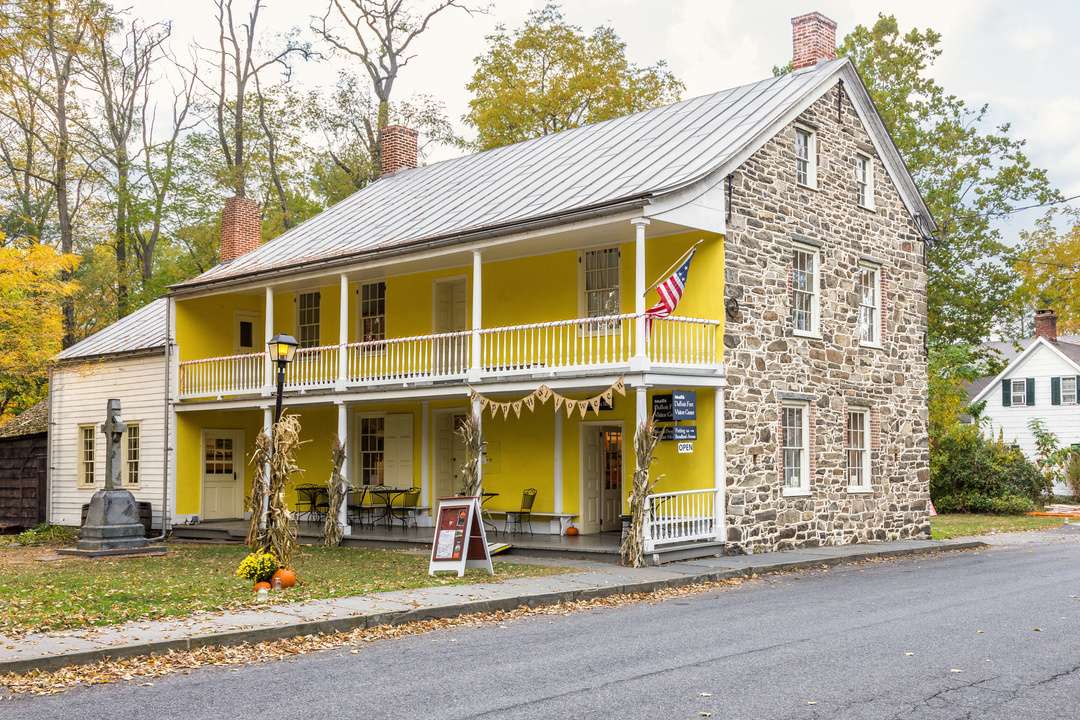
Louis DuBois, the American Huguenot, transformed persecution into promise. Shaped and strengthened by his family’s resilience, he and the patentees forged a community in New Paltz that echoed the faith of Wicres and Lille. From the daring rescue of his wife, Catherine, to the founding of a new town in a new world, Louis’s story embodies the Huguenot spirit: faith, courage, and perseverance.
His legacy endures not only in the historic stones of New Paltz but also in generations of descendants, from Hollywood icon Marlon Brando to President Franklin D. Roosevelt to General George Patton to the writer of these lines: each a living reminder that the Reformed faith once carried across the ocean continues to shape lives today.
Footnotes
- For the documented outline of Louis DuBois’s life, see Susan McNelley, Louis DuBois of Seventeenth-Century New Netherland: Walloon Founder of New Paltz, New York, 1-4; Charles W. Baird, History of the Huguenot Emigration to America, vol. 1 (New York: Dodd, Mead, 1885), 167-200; and Historic Huguenot Street, “DuBois Family Association.” ↩︎
- Historic Huguenot Street, “DuBois Family Association”; Baird, History of the Huguenot Emigration, 1:167-169; McNelley, Louis DuBois, 1. ↩︎
- Baird, History of the Huguenot Emigration, 1:167-184, on the Walloon Reformed communities surrounding Lille and Wicres. ↩︎
- Baird, History of the Huguenot Emigration, 1:167-184; Musée Protestant, “Guy de Brès (1522-1567).” ↩︎
- Musée Protestant, “Guy de Brès (1522-1567)”; Baird, History of the Huguenot Emigration, 1:167-184. ↩︎
- Baird, History of the Huguenot Emigration, 1:167-184, on persecution, clandestine worship, and French-speaking Reformed piety in the region. ↩︎
- Baird, History of the Huguenot Emigration, 1:184-189; McNelley, Louis DuBois, 1. ↩︎
- Baird, History of the Huguenot Emigration, 1:168; Ralph LeFevre, History of New Paltz, New York and Its Old Families (Albany: Fort Orange Press, 1903), 35-36, 280-287; McNelley, Louis DuBois, 1-2. The French Reformed register records the marriage at Mannheim on October 10, 1655. ↩︎
- Historic Huguenot Street, “History”; LeFevre, History of New Paltz, chapters 11-13. ↩︎
- Baird, History of the Huguenot Emigration, 1:189-193; McNelley, Louis DuBois, 1-2. McNelley dates Louis’s arrival to late 1660 or 1661. ↩︎
- Baird, History of the Huguenot Emigration, 1:194-198, especially 198, where the Psalm 137 episode is introduced with the words “Tradition represents.” ↩︎
- Baird, History of the Huguenot Emigration, 1:198, for the family tradition and its French metrical Psalm setting. ↩︎
- Baird, History of the Huguenot Emigration, 1:198. ↩︎
- Baird, History of the Huguenot Emigration, 1:198. ↩︎