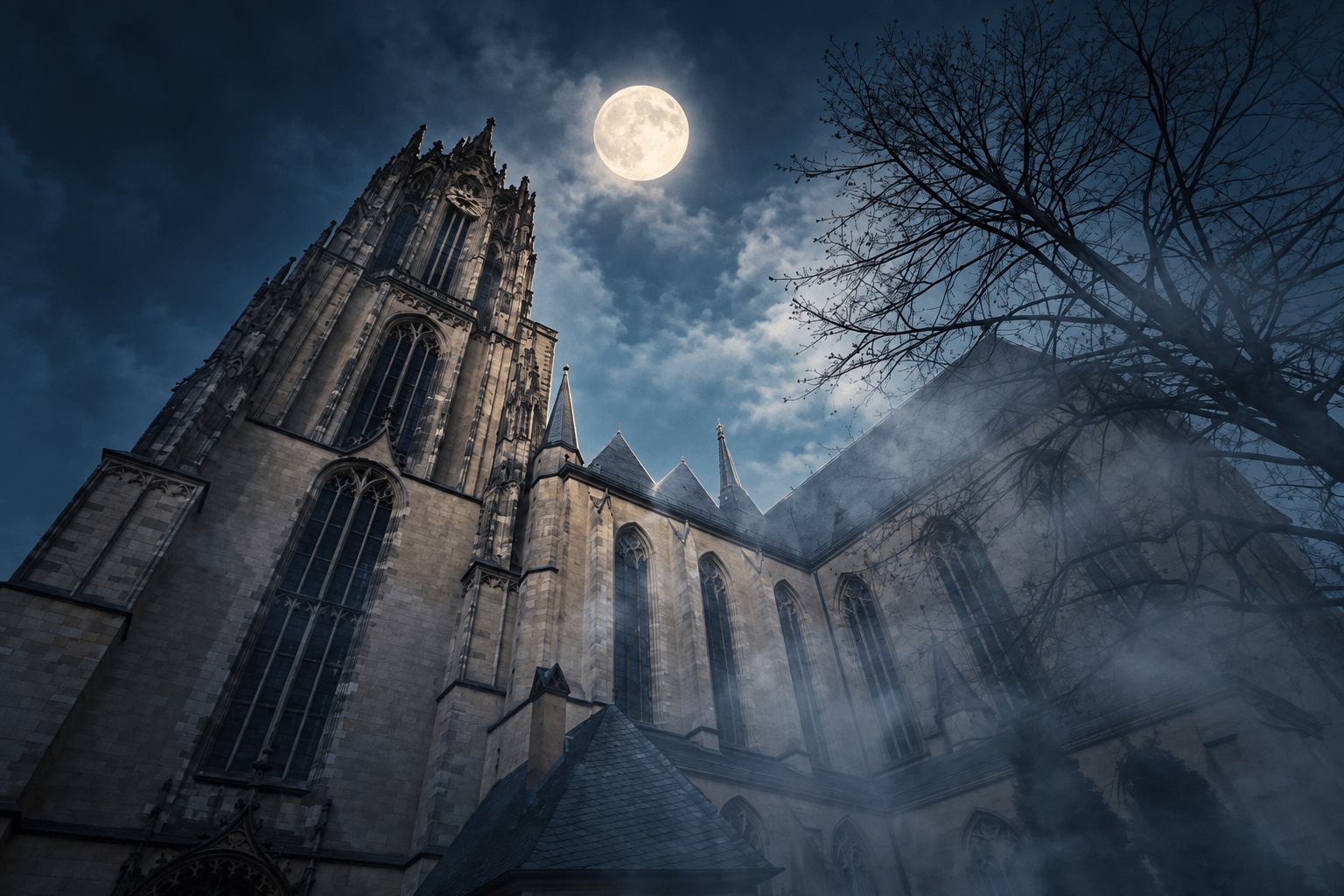
The month of October mixes a strange potion: the Reformation’s light and Halloween’s darkness, the gospel’s clarity and the world’s fascination with the occult. Around town, churches advertise trunk-or-treat events. Skeletons grin from porches, witches fly across store windows, and death sprawls across neighborhood lawns.
For some, the occult is entertainment. Others take it seriously, turning to horoscopes, mediums, or Ouija boards for answers about their lives and the future. The attraction is understandable: people want to know what lies ahead, especially when their circumstances leave them scared.
But Scripture warns us against seeking answers through these practices. God calls us to trust him with what he has not revealed. Calvin understood that astrology and witchcraft raised a question Christians still face today: Where do we turn for guidance when we cannot see what comes next?
Divination seeks knowledge through means God has forbidden. Instead of trusting what God has revealed and leaving the unknown in his hands, people turn elsewhere for answers.
Calvin saw that behind every charm or spell was not just error, but a false theology of providence.
Why Calvin Opposed Astrology
In John Calvin’s day, occultism was no child’s play. People consulted astrologers to learn what the future held.
Calvin opposed the belief that the stars governed their lives. In his commentary on Jeremiah 10:2, he wrote,
“We hence see that this divination extinguishes all religion”.1
John CalvinCommentaries on Jeremiah and Lamentations, Jeremiah 10:2
His concern was that people who believed the stars controlled their lives would stop turning to God in prayer, repentance, and thanksgiving.
In 1549, Calvin wrote a treatise against what was then called judiciary astrology, the attempt to predict people’s lives from the stars. His objection wasn’t to astronomy. He praised those who studied the heavens because “their science both glorifies God and serves human purposes”. What he opposed was giving the stars a power God had not given them.2
The Reformer’s View of Witchcraft
Calvin addressed witchcraft in his commentary on Exodus 22:18: “You shall not permit a sorceress to live.” This command belonged to Israel’s civil law.
He described people who practiced magic to harm others or sought revelations from the devil. Calvin called such practices a “wicked renunciation of God.” His concern was that people were turning from God to seek help or knowledge from the devil.3
For Calvin, the sinfulness of witchcraft is not just in its harm to others. It turns people away from God to seek help from the devil. Christians have a heavenly Father who knows what they need. We can ask for his help and trust his goodness, even when he has not told us what comes next. He wants us to walk by faith, not by sight, one day and one moment at a time (2 Corinthians 5:7).
Through occult practices, people seek knowledge or control that God has not given them. He calls us to trust him with the future, rather than seek answers through means he has forbidden.
Providence versus Manipulation
Calvin taught that even events we cannot explain remain under God’s rule. In the Institutes (1.16.3), he writes that “nothing happens but what he has knowingly and willingly decreed.” Christians don’t need spells or horoscopes to secure their future. We can pray, act responsibly, and trust our heavenly Father with the outcome.4
We cannot see everything God is doing, but we can trust him. The God who numbers the stars (Psalm 147:4) also directs our steps (Proverbs 16:9). Our peace comes from trusting him, even when we don’t know what lies ahead (Isaiah 26:3).
The True Counter to the Occult
Even a prediction that came true did not make divination lawful. Calvin wrote,
“God does permit deceivers to speak the truth sometimes, when he wishes to punish the unbelief of the wicked.”5
John CalvinA Warning Against Judiciary Astrology and Other Prevalent Curiosities, 185
He pointed readers to Deuteronomy 13:1-3, where a fulfilled sign still gives us no reason to follow someone who turns us away from God. We judge such practices by his Word, not by whether they appear to work.
If you’ve turned to these practices for guidance, turn away from them. Ask God’s forgiveness and seek his direction in Scripture. He has not promised to tell us everything about tomorrow, but he has told us how to live faithfully today.
The Dazzling Theater of God’s Glory
The universe is no Manichaean battleground, with God and Satan as two equal powers fighting for control. The devil is a creature, not God’s rival. He can do nothing beyond what God permits.
Calvin described the world as a “dazzling theater” of God’s glory. Even when evil brings suffering, God remains in control. He neither approves of sin nor loses control of those who commit it. What others intend for evil, he can use for good (Genesis 50:20). For Christians, our assurance rests in his promise to work all things together for the good of those who love him (Romans 8:28).6
Every event, every mystery, and every moment of history testifies that our God reigns. We need not fear, for “He who is in you is greater than he who is in the world” (1 John 4:4).
Footnotes
- John Calvin, Commentaries on Jeremiah and Lamentations, vol. 2, on Jeremiah 10:2 (trans. John Owen). ↩︎
- John Calvin, A Warning Against Judiciary Astrology and Other Prevalent Curiosities, trans. Mary Potter, Calvin Theological Journal 18.2 (1983), 174. ↩︎
- John Calvin, Harmony of the Law, vol. 2, on Exodus 22:18 (trans. Charles William Bingham). ↩︎
- Calvin, Institutes of the Christian Religion 1.16.3 (trans. Henry Beveridge). ↩︎
- Calvin, Warning Against Judiciary Astrology, 185. ↩︎
- John Calvin, Institutes of the Christian Religion 1.5.8 (trans. Ford Lewis Battles), vol. 1, 61. ↩︎